
Eye-Catching Data Marks The End Of The Year, And China’S Foreign Trade Can Be Expected To Develop Next Year
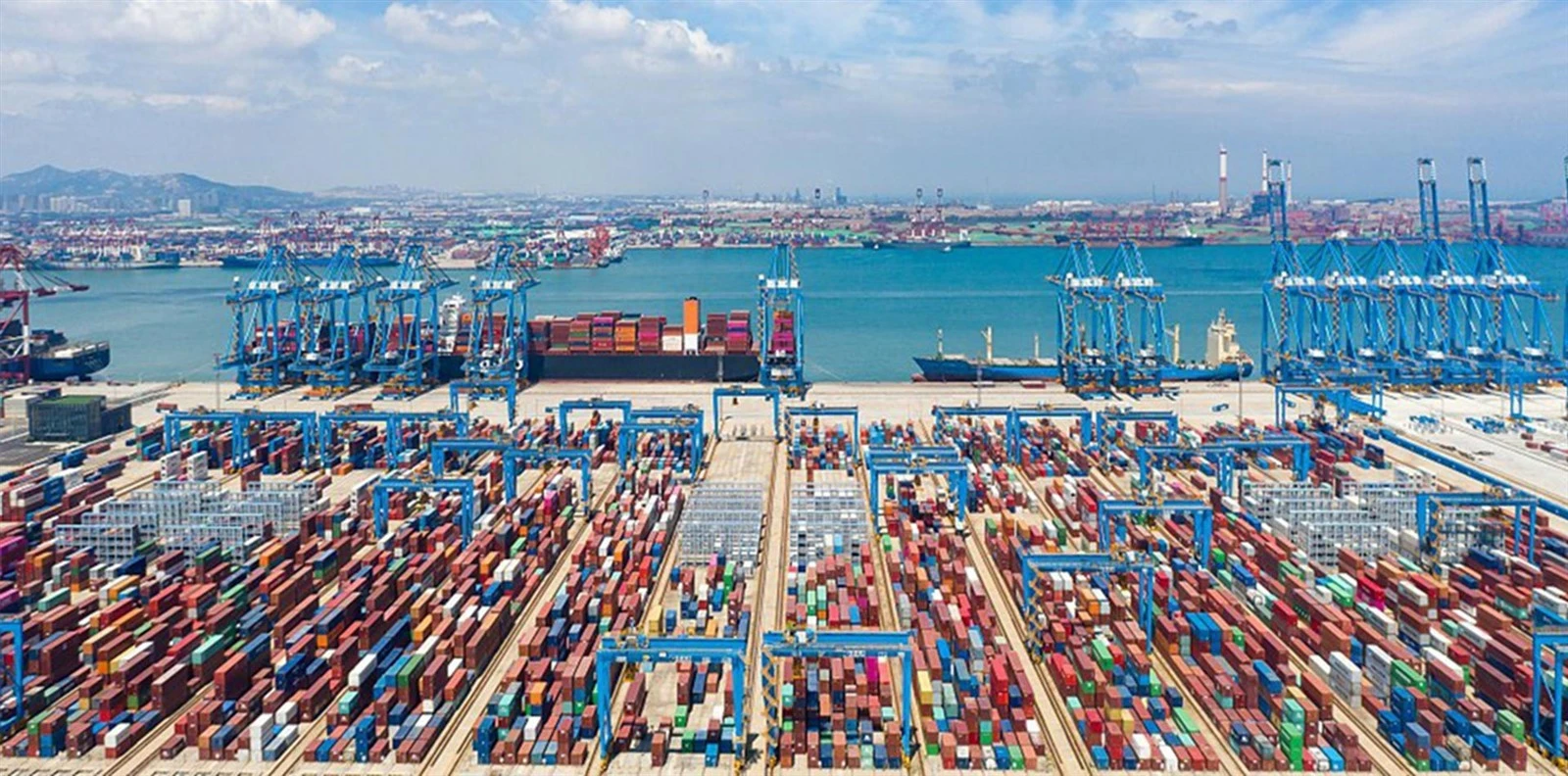 November is often a busy month in the foreign trade market over the years. The end-of-year consumption promotions overlap with people's need to bid farewell to the old and welcome the new. Many people hope to use year-end bonuses to reward themselves and their families after a busy year. However, it is precisely because of this pattern that the large base number in the same period last year has become a huge challenge to maintain foreign trade growth. In November last year, China's exports increased by 1.7% year-on-year in RMB terms, and the base was not low. Recently, the customs released data for November this year, which achieved a year-on-year growth of 0.5%. The growth rate rebounded by 4.8 percentage points from October, which was the highest value since May this year.
Judging from the important commodities exported, China's performance in the first 11 months of this year was distinctive, focused, and advanced and retreated. From January to November, China exported 589.74 billion yuan of agricultural products, a year-on-year increase of 6.6%. While exports of aquatic products and grains have declined, the export categories of other agricultural products have expanded, providing more food sources for the global market that is undersupplied due to geopolitical conflicts. Refined oil is an important commodity exported by China. Exports in the first 11 months were 277 billion yuan, a year-on-year increase of 13.5%, providing raw material security for downstream industries such as petrochemicals. The COVID-19 epidemic has enhanced the willingness of all parties to develop the health industry. The export of Chinese medicinal materials and Chinese patent medicines was 8.19 billion yuan, a year-on-year increase of 3.8%. From January to November, with the rise in labor costs and the evolution of the transfer of some supply chains to other developing countries, China's exports of most labor-intensive products shrank, but the export volume of luggage and plastic products remained the same. Performance was strong, achieving export growth of 9.3% and 0.5% respectively. In addition, the export value of textiles, clothing and clothing accessories, shoes and boots, and ceramic products decreased by 3.7%, 3.3%, 8.0%, and 11.5% respectively year-on-year. In recent years, due to the impact of import restrictions in some countries, the development of global steel and aluminum trade has been under pressure. From January to November, China's exports of steel and aluminum products also declined by 2.9% and 23.1% respectively. As the main force of China's exports, the export of mechanical and electrical products totaling 12.3 trillion yuan from January to November achieved a growth of 2.8%, becoming an important anchor for the stability of China's exports. Among them, the export performance of automobiles was the most outstanding, with an export value of 363.50 billion yuan, an increase of nearly 80% (79.6%) year-on-year; the export value of ships was second, with an export value of 125.81 billion yuan, a year-on-year increase of 36.5%; although the growth rate of auto parts was relatively low , 15.4%, but the export volume was high, reaching 488.01 billion yuan. The increase in exports of these electromechanical products made up for the decline in exports of automatic data processing equipment, integrated circuits and lamps.
Judging from the distribution of exports by country and region, there is indeed a lot of room for recovery in the external market demand faced by China's exports as a whole. From January to November, exports increased year-on-year in Malaysia (0.6%), Thailand (4.3%), Singapore (5.9%), Australia (0.8%), Russia (58.4%), India (6.2%), and South Africa. (5.8%) and the UK (1.3%). Most of these countries are China's neighbors and have good trade foundations. During the same period, China's exports to Latin America increased by 2.4% year-on-year, and exports to Africa increased by 13.5% year-on-year. The growth in exports to these countries or regions is not only the result of the recovery of demand from all parties, but also demonstrates the advantages of Chinese goods in meeting the needs of consumers and industrial and supply chains.
In 2024, the global economic situation is still not optimistic, geopolitical conflicts have not yet reached an inflection point, the global restructuring of supply chains has brought a lot of additional costs, and the high oscillation of the Federal Reserve interest rate is still a Damocles hanging over the heads of highly indebted economies. Sword of Si. But the world needs products made in China, and under external challenges, all parties may gain more opportunities by importing from China. Faced with fragile and volatile demand and insufficient purchasing power, only manufacturing capabilities that are strong enough and have flexible supply methods can meet the demand. China's important role in global manufacturing is expected to be further enhanced.
However, the growth of exports may not be a natural result and needs to be proactive. Companies in various countries are responding to various internal and external changes with different strategies and methods. China's export companies need to strengthen coordination with the upstream supply chain and design in advance and cooperate with service support companies including finance, logistics, information and commerce. In the face of changes in the external environment, hiding and escaping are not solutions, and may even damage mutual trust and cooperative relationships with partners. Chinese companies need to take active action to explore effective ways of innovative cooperation, take reasonable measures to improve environmental adaptation and risk response capabilities, do a good job in advance adjustments and expectation management, and strive to maintain the stability of business relationships and cash flow. Even if emergencies occur again, it is necessary to act efficiently based on adequate plans to reduce the damage caused by uncertainty to the sustainable operation of enterprises.