
Transport Packaging Of Stainless Steel Pipe Fittings
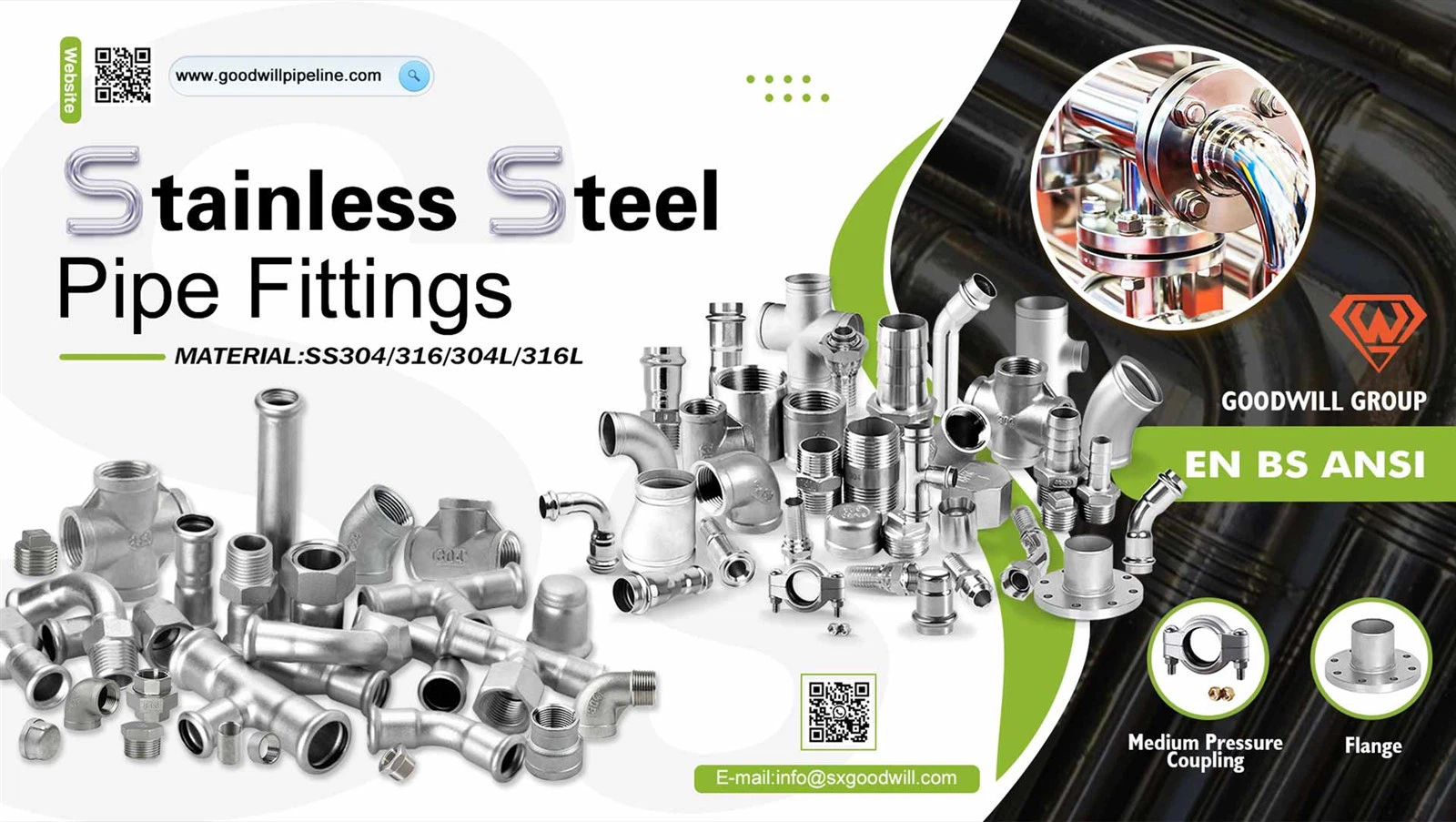 Stainless steel pipe fittings (such as elbows, tees, reducers, couplings, and caps) are widely used in industries like oil & gas, chemical, water supply, food processing, and HVAC systems due to their durability, corrosion resistance, and hygienic properties. However, because of their high value and precise dimensions, careful packaging is essential to prevent scratches, dents, contamination, or deformation during handling, storage, and transportation.
1. Packaging Objectives
Protection from Mechanical Damage – Prevent dents, bending, and thread deformation caused by impact or stacking pressure.
Surface Preservation – Avoid scratches, abrasions, and rust spots that affect both function and appearance.
Cleanliness & Hygiene – Maintain sanitary condition, especially for fittings used in food, pharmaceutical, or water systems.
Efficient Handling & Storage – Ensure ease of palletization, stacking, and container loading.
Export Compliance – Meet international shipping requirements (e.g., fumigation for wooden packaging, labeling standards).
2. Inner Packaging
a. Individual Wrapping
Each fitting is wrapped in plastic film, bubble wrap, or PE bags to prevent scratches and contamination.
Threaded fittings are often fitted with plastic thread caps to protect threads from damage.
b. Small Fittings (e.g., couplings, caps, nipples)
Packed in poly bags or shrink-wrapped bundles.
Grouped by size and specification for easy identification.
c. Medium & Large Fittings (e.g., elbows, tees, reducers)
Placed in corrugated cardboard boxes or cartons with partition dividers to avoid collision.
Lined with foam sheets or anti-rust paper if required.
3. Outer Packaging
a. Cartons & Pallets
Cartons are sealed with waterproof adhesive tape.
Multiple cartons are stacked on fumigated wooden pallets or plastic pallets.
Secured with nylon straps and stretch film for stability and moisture protection.
b. Wooden Crates (For Heavy or High-Value Orders)
Large or heavy stainless steel fittings may be packed in wooden crates with internal padding.
Ensures maximum protection against impact and vibration during long-distance transport.
4. Container Loading & Export Shipment
For sea freight, cartons or crates are loaded into 20ft/40ft containers, secured with belts and wooden blocks to prevent shifting.
Desiccants and ventilation bags may be used inside containers to control humidity and prevent corrosion.
Heavy fittings are placed at the bottom, lighter cartons on top, ensuring safe weight distribution.
5. Labeling & Documentation
Each carton or crate carries product labels with size, grade (e.g., SS304, SS316), standards (ASTM, DIN, ISO), and batch numbers for traceability.
Export marks include destination, handling instructions ("FRAGILE", "KEEP DRY"), and barcodes/QR codes for inventory scanning.
6. Special Considerations
Anti-Corrosion Measures – Use of VCI (Volatile Corrosion Inhibitor) bags, desiccants, or anti-rust oil for long-distance or humid-climate shipments.
Hygiene Packaging – For food- and pharma-grade fittings, packaging materials must be clean, dust-free, and compliant with hygiene standards.
Eco-Friendly Options – Increasing adoption of recyclable cardboard, reusable plastic pallets, and biodegradable packing films.
Conclusion
The transport packaging of stainless steel pipe fittings focuses on individual protection, secure cartonization, palletized shipment, and corrosion prevention. Proper packaging ensures fittings arrive in pristine condition, maintaining both functionality and appearance, while complying with international logistics standards.