

Cost-Benefit Analysis Of Malleable Iron Pipe Fittings
 Cost-Benefit Analysis Of Malleable Iron Pipe Fittings
1. Introduction
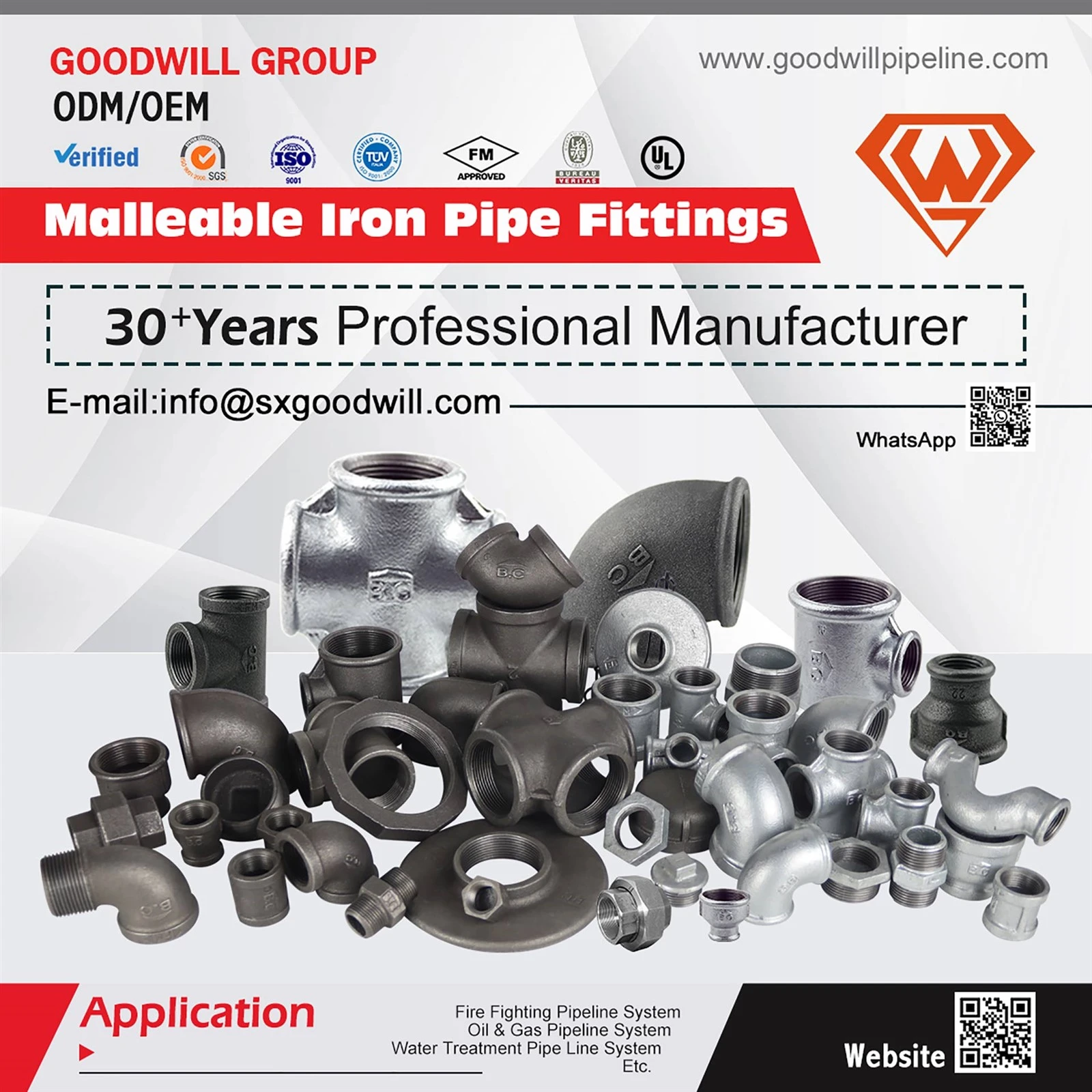
Malleable iron pipe fittings are widely used in plumbing systems, fire protection installations, gas distribution networks, industrial pipelines, and other fluid transportation applications. Common products include elbows, tees, couplings, unions, reducers, plugs, caps, and bushings. These fittings connect pipes, change flow directions, divide pipelines, and provide reliable connections between different pipe sections.
When purchasing pipe fittings, buyers often focus on the unit price. However, the actual cost of a piping system involves much more than the initial purchase price. Installation labor, transportation, maintenance, replacement frequency, leakage risks, and service life can all influence the total cost of ownership.
A cost-benefit analysis of malleable iron pipe fittings helps distributors, contractors, wholesalers, and industrial buyers evaluate whether these products provide good long-term value. By considering both direct and indirect costs, buyers can make more informed purchasing decisions and select fittings that balance performance, durability, and budget requirements.
2. Understanding the Initial Purchase Cost
The initial purchase cost is the most visible expense when sourcing malleable iron pipe fittings. It generally refers to the amount paid to manufacturers or suppliers for the products themselves.
Several factors influence the purchase price.
2.1 Raw Material Costs
The price and quality of iron-based raw materials directly affect manufacturing costs. Changes in raw material markets may influence the final quotation.
2.2 Manufacturing Processes
Malleable iron pipe fittings require casting, heat treatment, machining, surface finishing, and inspection. Manufacturing complexity and production efficiency influence the cost of each product.
2.3 Product Specifications
Different fitting sizes, shapes, thread specifications, pressure ratings, and wall thicknesses require different amounts of material and processing work.
2.4 Surface Treatment
Black, galvanized, and other specified surface finishes involve different processing requirements. Hot-dip galvanizing, for example, generally adds material and processing costs compared with an untreated black finish.
2.5 Order Quantity
Larger orders may reduce the unit cost through economies of scale. However, buyers should also consider inventory costs and the risk of purchasing more products than their projects require.
2.6 Certification and Quality Requirements
Products manufactured under specific standards or certification requirements may involve additional testing, documentation, production controls, and inspection expenses.
A competitive purchase price should therefore be evaluated together with product specifications, manufacturing quality, and supplier reliability.
3. Manufacturing Cost and Production Efficiency
The manufacturing process plays an important role in determining the cost structure of malleable iron pipe fittings.
Typical production stages include:
Raw material preparation
Casting and mold preparation
Heat treatment
Surface cleaning and finishing
Machining and threading
Surface treatment
Dimensional inspection
Pressure or other applicable testing
Packaging and storage
Each production stage contributes to the final product cost.
Efficient production management can reduce material waste, improve manufacturing consistency, and increase output. Automated equipment and optimized production processes may also reduce labor costs and improve dimensional accuracy.
However, reducing manufacturing costs should not compromise material properties, thread accuracy, pressure performance, or applicable product requirements.
For buyers, a supplier with stable production processes may provide better long-term value than a supplier offering a lower quotation but inconsistent product quality.
4. Installation Cost Advantages
Installation costs are an important part of the total project budget. Malleable iron pipe fittings are commonly used with threaded pipe connections, which can simplify installation in suitable piping systems.
4.1 Threaded Connection Design
Threaded connections allow compatible pipes and fittings to be assembled without requiring welding. This can reduce the need for specialized welding equipment and qualified welding labor.
4.2 Reduced Installation Equipment Requirements
For suitable applications, installation generally requires standard pipe-fitting tools rather than extensive welding equipment or complex joining machinery.
4.3 Convenient Assembly and Disassembly
Threaded fittings can often be removed and replaced more conveniently than permanently welded connections, provided that the system is properly isolated and the connection design permits disassembly.
4.4 Flexible Pipeline Configuration
Elbows, tees, unions, reducers, and other fitting types allow installers to create different pipeline layouts without manufacturing customized connection pieces for every change in direction or pipe size.
These characteristics can help reduce installation time and labor expenses in compatible applications.
However, installation costs still depend on pipe size, system pressure, working conditions, accessibility, thread quality, sealing requirements, and local labor rates.
5. Durability and Service Life
Durability is one of the major factors affecting the long-term cost-effectiveness of malleable iron pipe fittings.
Malleable iron fittings are manufactured through casting and heat treatment processes designed to produce useful mechanical properties. Their strength and toughness make them suitable for many industrial and commercial piping applications when the products are correctly specified.
A longer service life can reduce the frequency of replacement and associated labor costs.
Important factors influencing service life include:
Raw material quality
Casting integrity
Heat treatment consistency
Wall thickness and structural design
Thread accuracy
Surface protection
Fluid characteristics
Operating temperature and pressure
Installation quality
Environmental conditions
The actual service life cannot be determined by material type alone. Buyers should evaluate the product's technical specifications and intended operating environment.
6. Corrosion Resistance and Surface Treatment Costs
Corrosion can increase maintenance expenses, cause leakage, and shorten the service life of piping systems. Therefore, surface treatment is an important consideration in the cost-benefit analysis.
6.1 Black Malleable Iron Pipe Fittings
Black fittings generally have no metallic zinc coating. They are commonly selected for suitable indoor or protected applications where the operating environment does not require additional galvanic protection.
Their lower initial purchase cost may be attractive for projects with appropriate environmental conditions.
6.2 Galvanized Malleable Iron Pipe Fittings
Galvanized fittings have a zinc coating that helps protect the iron-based material against corrosion.
They are commonly selected for applications where additional corrosion protection is required. The coating adds to the initial purchase price but may reduce corrosion-related maintenance costs under suitable conditions.
6.3 Other Protective Coatings
Depending on the application, additional coating systems or specialized surface treatments may be considered.
The selection should account for environmental exposure, fluid compatibility, coating durability, and applicable system requirements.
A more expensive surface finish is not automatically the most cost-effective choice. The correct option is the one that provides suitable protection without unnecessary expenditure.
7. Maintenance Cost Considerations
Maintenance costs include inspection, cleaning, leakage repair, replacement of damaged fittings, and labor expenses.
Malleable iron pipe fittings can provide stable service when they are properly selected, installed, and maintained.
Several factors can help control maintenance costs:
Selecting suitable materials and surface finishes
Ensuring accurate thread dimensions
Using compatible sealing materials
Applying appropriate installation procedures
Avoiding excessive tightening
Inspecting connections for corrosion and leakage
Replacing damaged components promptly
Operating within specified pressure and temperature limits
Threaded connections can also make localized repairs more manageable in suitable systems because individual fittings may be replaced without reconstructing the entire pipeline.
Nevertheless, maintenance requirements vary according to the application, operating environment, and system design.
8. Transportation and Storage Costs
Transportation and storage are often overlooked when calculating the total cost of pipe fittings.
Malleable iron fittings are relatively compact compared with many large pipeline components, but their weight and packaging requirements still affect logistics expenses.
8.1 Transportation Costs
Shipping costs depend on product weight, order volume, packaging dimensions, shipping method, and destination.
For international buyers, sea freight is often considered for larger shipments, while air freight may be used for urgent or smaller orders.
8.2 Packaging Costs
Appropriate packaging helps protect fittings from impact, moisture, contamination, and surface damage during transportation.
Common packaging methods include cartons, woven bags, pallets, and wooden cases, depending on product size and customer requirements.
8.3 Storage Costs
Buyers should consider warehouse space, inventory turnover, handling expenses, and corrosion protection during storage.
Proper storage can reduce product deterioration and unnecessary replacement before installation.
8.4 Inventory Management
Standardized fittings with stable specifications can simplify inventory planning. However, purchasing excessive quantities may increase storage costs and tie up working capital.
Efficient order planning helps balance procurement discounts with inventory requirements.
9. Cost Benefits of Standardized Product Specifications
Standardized malleable iron pipe fittings can provide economic advantages for both manufacturers and buyers.
Standardized dimensions and thread specifications help improve compatibility with corresponding pipes, valves, and other pipeline components.
The benefits include:
Easier product selection
More convenient replacement
Reduced customization requirements
Simplified inventory management
Better compatibility across projects
More predictable procurement planning
Reduced risk of dimensional mismatches
For distributors and wholesalers, maintaining a range of commonly used standardized fittings can improve inventory turnover and reduce the need for special-order products.
However, buyers must verify that the selected standard and thread system match the requirements of the intended market and installation.
10. Comparison with Alternative Pipe Fitting Materials
The cost-effectiveness of malleable iron pipe fittings becomes clearer when compared with alternative materials.
| Material | Initial Cost | Main Advantages | Cost Considerations |
|---|---|---|---|
| Malleable Iron | Generally moderate | Strength, threaded connection options, broad availability | Requires suitable corrosion protection |
| Cast Iron | Varies by product and application | Good compressive strength and established applications | Brittle behavior may limit certain uses |
| Stainless Steel | Generally higher | Strong corrosion resistance in suitable environments | Higher material and machining costs |
| Brass | Generally higher than standard iron fittings | Corrosion resistance and convenient machining | Material price can increase procurement costs |
| Carbon Steel | Varies by product type | Strength and broad industrial use | Corrosion protection may be required |
The comparison is general rather than universal. Actual prices and performance depend on product dimensions, manufacturing methods, specifications, market conditions, and application requirements.
Malleable iron is often a practical option when buyers need a balance between mechanical performance, threaded connection convenience, availability, and purchase cost.
11. Total Cost of Ownership Analysis
Total Cost of Ownership (TCO) provides a more complete way to evaluate the financial value of malleable iron pipe fittings.
Instead of considering only the purchase price, TCO includes the costs associated with purchasing, installing, operating, maintaining, and replacing the products throughout their service life.
A simplified calculation is:
Total Cost of Ownership = Purchase Cost + Transportation Cost + Installation Cost + Maintenance Cost + Replacement Cost + Other Associated Costs
For example, consider two hypothetical purchasing options for the same project.
| Cost Item | Option A | Option B |
|---|---|---|
| Purchase Cost | $10,000 | $11,500 |
| Transportation Cost | $800 | $800 |
| Installation Cost | $3,000 | $2,700 |
| Estimated Maintenance Cost | $2,000 | $1,200 |
| Estimated Replacement Cost | $1,500 | $800 |
| Total Estimated Cost | $17,300 | $17,000 |
In this hypothetical example, Option B has a higher purchase price but a lower estimated total cost.
The figures are illustrative only and do not represent actual market quotations or guaranteed product performance.
For a reliable comparison, buyers should use consistent project conditions, evaluation periods, product specifications, and cost assumptions.
12. Economic Benefits for Different Buyers
The financial advantages of malleable iron pipe fittings may vary according to the buyer's business model.
12.1 Contractors
Contractors often focus on installation efficiency, product compatibility, project deadlines, and overall construction costs.
Threaded connections can reduce welding requirements in suitable applications, helping contractors manage labor and equipment expenses.
12.2 Wholesalers and Distributors
Wholesalers and distributors generally consider purchase price, inventory turnover, product variety, packaging, and supplier stability.
Standardized fittings with consistent specifications can help reduce stock complexity and improve order fulfillment efficiency.
12.3 Industrial Buyers
Industrial buyers focus on operational reliability, maintenance requirements, compatibility with existing pipelines, and the consequences of unexpected downtime.
Choosing suitable fittings can help reduce leakage-related maintenance and replacement expenses.
12.4 Fire Protection Contractors
Fire protection contractors must consider system design requirements, product approvals, installation compatibility, and inspection requirements.
The lowest purchase price should never take priority over compliance and system reliability.
13. Factors That Improve the Cost-Effectiveness of Malleable Iron Pipe Fittings
Buyers can improve the economic value of their purchases through careful product selection and supplier evaluation.
13.1 Selecting the Correct Product Type
Choose elbows, tees, couplings, unions, reducers, plugs, and other fittings according to the actual pipeline configuration.
Correct selection reduces unnecessary adapters, installation modifications, and material waste.
13.2 Matching the Correct Thread Standard
Verify thread type, size, and dimensional requirements before ordering. This helps prevent installation delays and compatibility problems.
13.3 Choosing Suitable Surface Treatment
Select black, galvanized, or other specified finishes according to the operating environment and corrosion protection requirements.
13.4 Evaluating Supplier Quality Control
Consider the supplier's raw material management, casting processes, heat treatment, machining accuracy, inspection procedures, and traceability.
Consistent manufacturing quality can reduce the risk of defective products and unexpected project expenses.
13.5 Optimizing Order Quantities
Combine commonly used specifications where practical to improve purchasing efficiency and reduce repeated transportation costs.
At the same time, avoid excessive inventory that may increase storage expenses.
13.6 Reviewing Packaging and Logistics
Confirm packaging strength, moisture protection, pallet requirements, and shipping arrangements before placing large orders.
14. Risks of Choosing Low-Cost Malleable Iron Pipe Fittings
A low purchase price does not always mean better economic value.
Products manufactured with inconsistent materials or inadequate process control may create additional costs during installation and operation.
Potential risks include:
Inaccurate threads that cause connection problems
Casting defects that affect structural integrity
Inconsistent heat treatment that affects mechanical properties
Poor surface treatment that increases corrosion risk
Incorrect dimensions that create compatibility issues
Insufficient inspection that allows defective products to enter the supply chain
Inadequate packaging that causes transportation damage
These problems may lead to rework, leakage, product replacement, project delays, and increased maintenance expenses.
Buyers should therefore evaluate supplier capability, product documentation, inspection records, and relevant certifications rather than comparing quotations alone.
15. Environmental and Sustainability Considerations
Sustainability is becoming an increasingly important part of industrial procurement.
Malleable iron pipe fittings are metal products that can generally enter established metal recycling channels at the end of their useful life, subject to local recycling facilities and contamination requirements.
Several factors contribute to their environmental and economic value:
Metal recycling can help recover material resources.
Durable products may reduce the frequency of replacement.
Efficient manufacturing can reduce material waste.
Appropriate packaging can reduce transportation damage.
Better inventory management can reduce obsolete stock.
However, environmental performance depends on the complete product lifecycle, including raw material sourcing, energy consumption, manufacturing, transportation, use, and recycling.
Buyers seeking sustainable procurement should request relevant environmental information from manufacturers instead of relying on material type alone.
16. How to Evaluate a Malleable Iron Pipe Fitting Supplier
Choosing a reliable supplier is essential for controlling procurement costs and maintaining consistent product quality.
Important evaluation criteria include:
16.1 Manufacturing Capability
Check whether the supplier has suitable casting, heat treatment, machining, threading, and surface treatment facilities.
16.2 Quality Management
Review inspection procedures for dimensions, thread accuracy, material properties, appearance, and applicable performance requirements.
16.3 Product Range
A supplier offering a broad range of elbows, tees, couplings, unions, reducers, and other fittings may simplify procurement and reduce the number of suppliers involved.
16.4 Standards and Certifications
Confirm that products meet the standards and certification requirements specified for the intended application and target market.
16.5 Production Capacity
Evaluate whether the supplier can handle the required order quantity, production schedule, and repeat orders.
16.6 Export and Packaging Experience
For international buyers, experience with export packaging, shipping documentation, and international logistics can help reduce delivery risks.
16.7 After-Sales Support
Reliable communication, technical assistance, and an effective response to quality issues can reduce the indirect costs of procurement.
17. Conclusion
The cost-benefit analysis of malleable iron pipe fittings should consider more than the initial purchase price. Manufacturing quality, installation efficiency, durability, corrosion protection, maintenance requirements, transportation, and replacement frequency all contribute to the total cost of ownership.
Malleable iron pipe fittings can offer practical economic advantages through their mechanical properties, threaded connection options, standardized product range, and broad availability. When correctly selected for suitable applications, they can help buyers balance procurement budgets with installation efficiency and long-term operating requirements.
For contractors, distributors, wholesalers, and industrial buyers, the most cost-effective purchasing strategy is to evaluate product specifications, supplier reliability, and lifecycle expenses together. Selecting fittings that meet the actual project requirements can reduce unnecessary costs and support more reliable piping systems over time.